How to Choose Cabinet Handles

How to Choose Cabinet Handles
Cabinet handles influence how a cabinet looks, feels and operates.
The correct handle should:
- Match the cabinet design
- Provide a comfortable grip
- Suit the door or drawer size
- Support the required pulling force
- Fit the drilling pattern
- Withstand the operating environment
- Remain consistent across the project
Choosing only by appearance can result in uncomfortable operation, incorrect drilling, loose fixings or handles that are visually out of proportion.
This guide explains how cabinet manufacturers, interior designers, contractors and buyers can select the correct cabinet handles for different applications.
Quick Answer: How Do You Choose Cabinet Handles?
Use the following selection process:
- Identify the cabinet application.
- Confirm the door or drawer dimensions.
- Select the handle type.
- Determine the required handle size.
- Confirm center-to-center spacing.
- Evaluate grip and projection.
- Select the base material.
- Approve the surface finish.
- Confirm screws and installation.
- Test a physical sample on the cabinet.
For project orders, also confirm batch consistency, packaging, spare parts and replacement compatibility.
1. Identify the Cabinet Application
Start by asking where the handle will be installed.
Kitchen Cabinets
Kitchen handles should be:
- Comfortable for frequent use
- Easy to clean
- Securely fixed
- Suitable for doors and drawers
- Resistant to normal kitchen humidity and contact
Common choices include bar pulls, bow pulls, knobs, cup pulls, edge pulls and profile handles.
Wardrobes
Wardrobe doors may be taller and heavier than kitchen-cabinet doors.
Consider:
- Longer gripping area
- Strong fixing
- Adequate projection
- Visual proportion
- Door weight
- Handle placement
Bathroom Vanities
Consider:
- Humidity
- Cleaning chemicals
- Surface resistance
- Easy-to-clean shapes
- Corrosion performance
Office Furniture
Common priorities include:
- Durability
- Simple appearance
- Standard hole spacing
- Easy replacement
- Cost efficiency
Hotel and Apartment Projects
Project handles should also provide:
- Batch color consistency
- Standardized drilling
- Clear packaging
- Spare-parts availability
- Reliable long-term supply
Appliance and Heavy Doors
Integrated refrigerators, dishwashers and heavy pantry doors may require appliance pulls or specially reinforced handles.
A standard decorative pull should not automatically be used on an appliance door.
2. Confirm the Door or Drawer Dimensions
Record:
- Door or drawer-front height
- Width
- Thickness
- Material
- Weight
- Opening direction
These factors affect the handle’s:
- Overall length
- Grip area
- Projection
- Fixing strength
- Screw length
- Visual proportion
A small knob may suit a lightweight wall-cabinet door but feel uncomfortable on a tall wardrobe.
Similarly, an extra-long handle may overpower a narrow drawer front.
3. Choose the Handle Type
Bar Pulls

Suitable for:
- Modern kitchens
- Wardrobes
- Wide drawers
- Contemporary furniture
They provide a generous gripping area and are available in many lengths.
Bow Pulls

Suitable for:
- Kitchens
- Office furniture
- Wardrobes
- Transitional furniture
Their curved shape often provides a comfortable grip and softer appearance.
Cabinet Knobs

Suitable for:
- Small cabinet doors
- Traditional kitchens
- Bathroom vanities
- Decorative furniture
Knobs usually require one drilling hole but offer a smaller gripping area.
Cup Pulls

Suitable for:
- Drawers
- Shaker cabinets
- Traditional kitchens
- Farmhouse-style furniture
The user normally grips them from underneath.
Edge Pulls
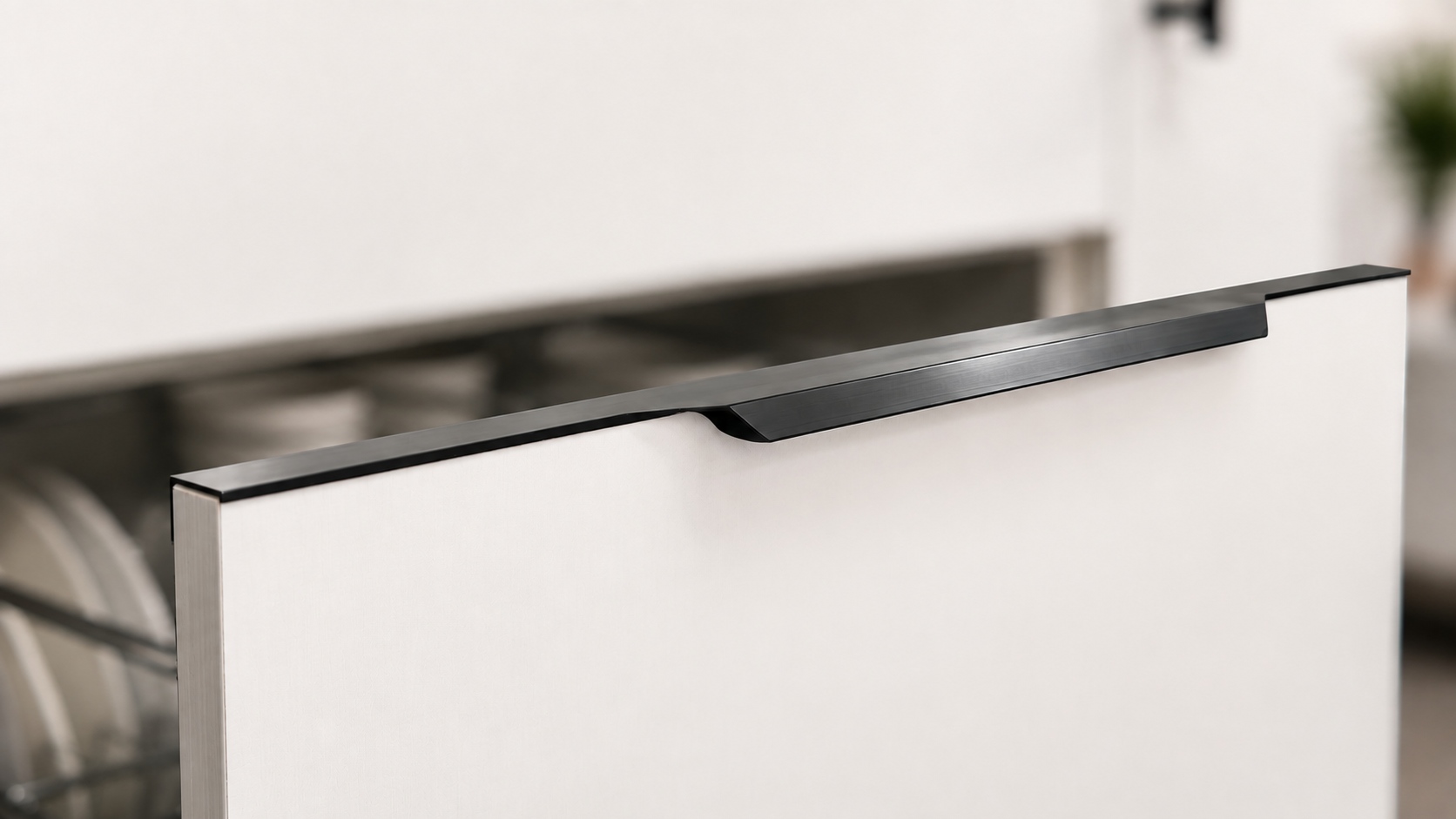
Suitable for:
- Minimalist kitchens
- Modern drawers
- Wardrobes
- Handle-reduced designs
Check door thickness and adjacent gaps before selection.
Finger Pulls
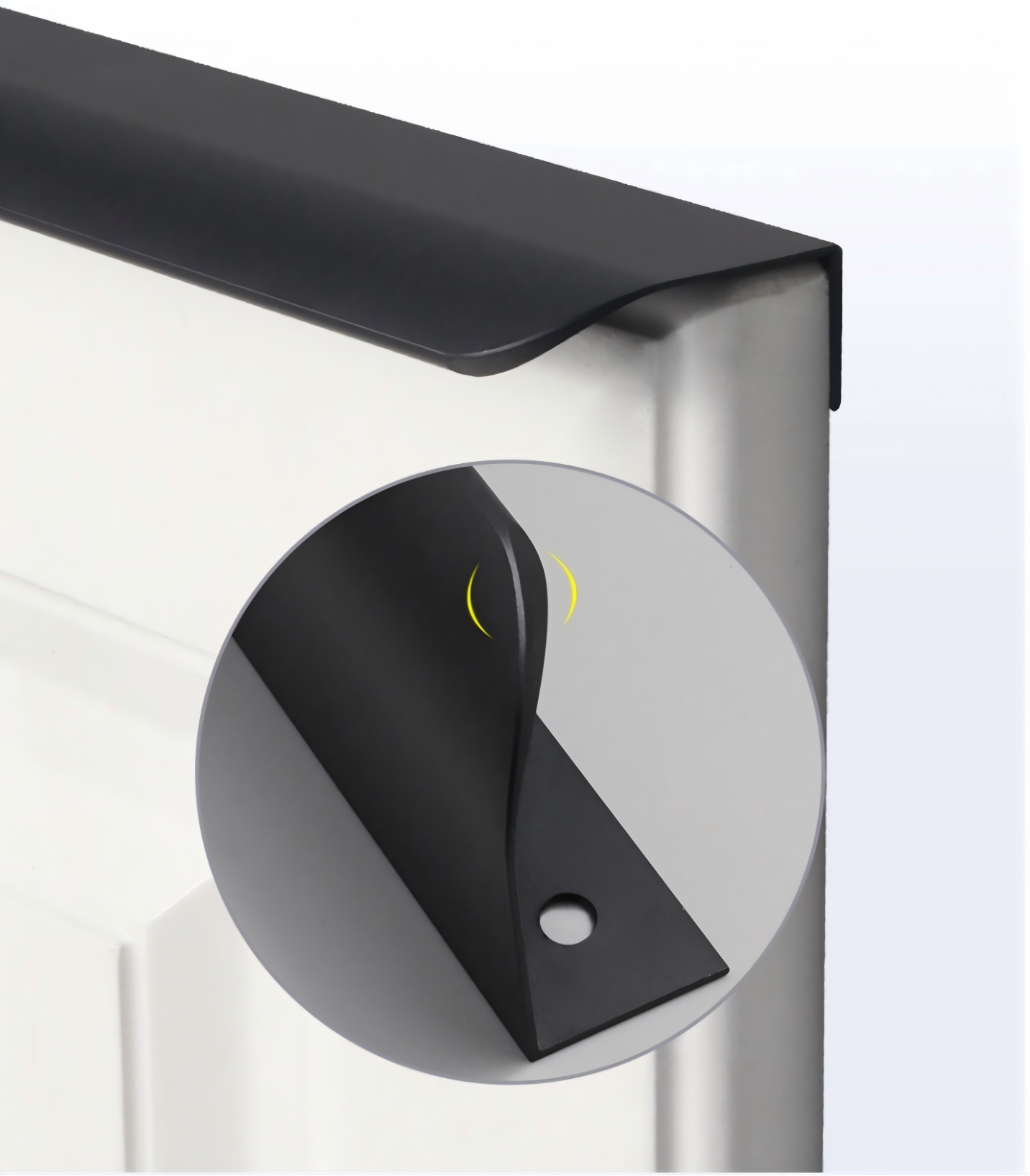
Suitable for:
- Compact cabinets
- Minimalist furniture
- Lightweight doors
- Modern interior designs
Test the gripping comfort on the actual cabinet.
Recessed Pulls
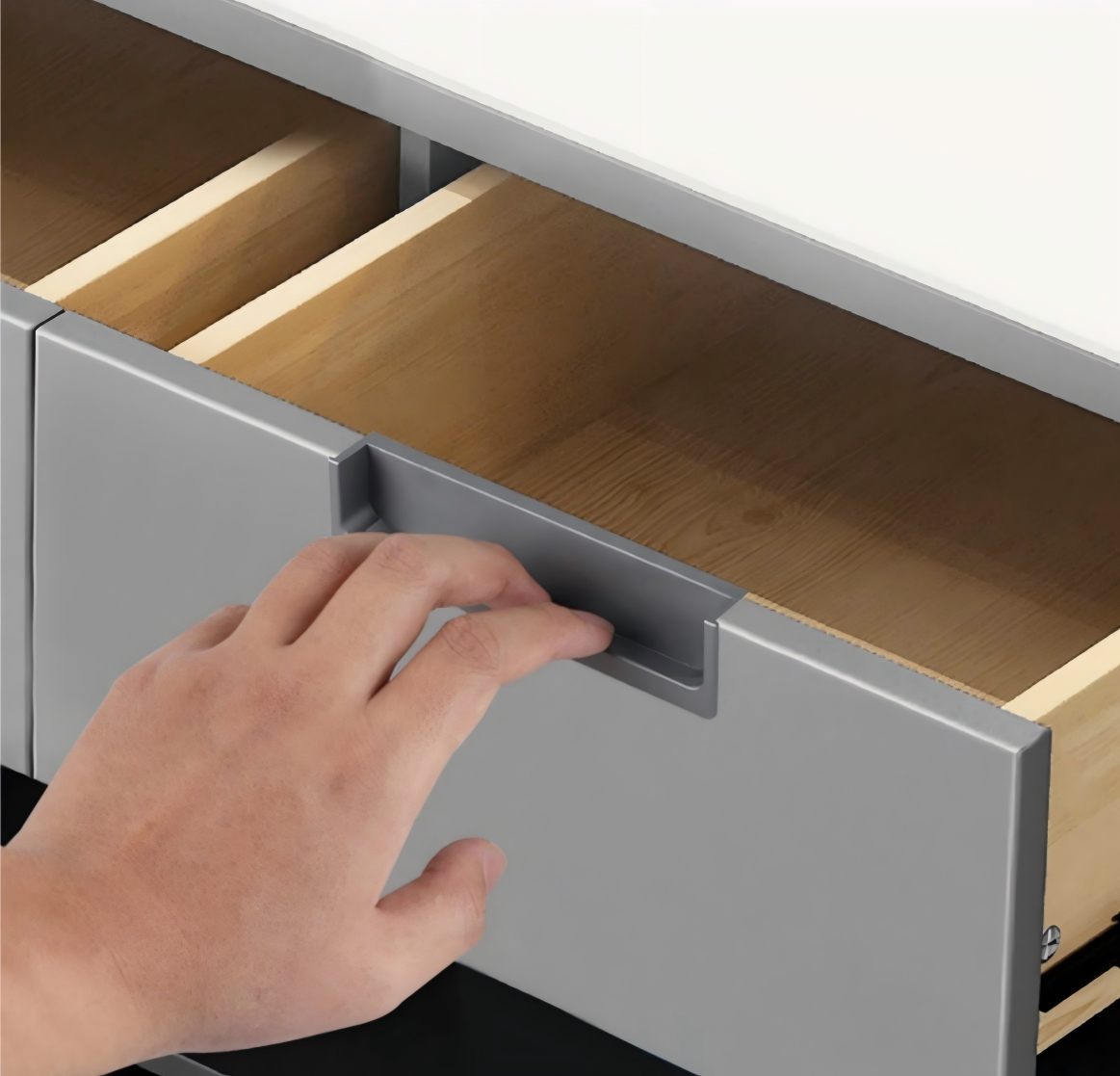
Suitable for:
- Sliding doors
- Pocket doors
- Space-saving cabinets
- Office furniture
They require accurate machining or routing.
Profile Handles

Suitable for:
- Kitchens
- Wardrobes
- Long drawers
- Continuous cabinet designs
Confirm the required length, cutting process and end treatment.
Appliance Pulls

Suitable for:
- Integrated refrigerators
- Dishwashers
- Heavy pantry doors
- Large cabinet fronts
They require stronger construction and fixings.
Handle Type Selection Table
|
Application |
Common Handle Options |
|
Small cabinet door |
Knob, short pull or finger pull |
|
Kitchen wall cabinet |
Bar pull, bow pull, knob or edge pull |
|
Wide kitchen drawer |
Medium or long pull |
|
Tall wardrobe door |
Long pull, profile handle or edge pull |
|
Traditional drawer |
Cup pull or decorative pull |
|
Minimalist kitchen |
Edge pull, finger pull or profile handle |
|
Sliding wardrobe door |
Recessed pull |
|
Integrated appliance |
Appliance pull |
|
Office cabinet |
Bar pull, bow pull or wire pull |
These are starting points. Final selection should consider the complete cabinet design and user requirements.
4. Select the Correct Handle Size
Handle size affects both appearance and comfort.
Important dimensions include:
- Center-to-center spacing
- Overall length
- Projection
- Grip clearance
- Handle width or diameter
- Base dimensions
Small Doors
Short pulls or knobs may provide sufficient operation without visually dominating the door.
Wide Drawers
A medium or long pull may provide better proportion and easier operation.
Some wide drawers use two pulls, but this may encourage users to pull from one side and create uneven force. The drawer system and design should be considered before deciding.
Tall Doors
Long handles may improve both grip and visual proportion.
The fixing strength must suit the door weight and expected pulling force.
Is There a Universal Handle-to-Door Ratio?
No.
Handle proportion depends on:
- Cabinet style
- Door dimensions
- Handle shape
- Design intent
- User preference
Use drawings, full-size templates or physical samples instead of relying on a universal percentage.
5. Understand Center-to-Center Spacing
Center-to-center, or C-C, is the distance between the centers of the mounting holes.
It is one of the most important cabinet-handle dimensions.
Common metric sizes include:
- 64mm
- 96mm
- 128mm
- 160mm
- 192mm
- 224mm
- 256mm
- 320mm
Other sizes are also available.
For New Cabinets
The handle can be selected before drilling, providing greater design flexibility.
For Replacement Projects
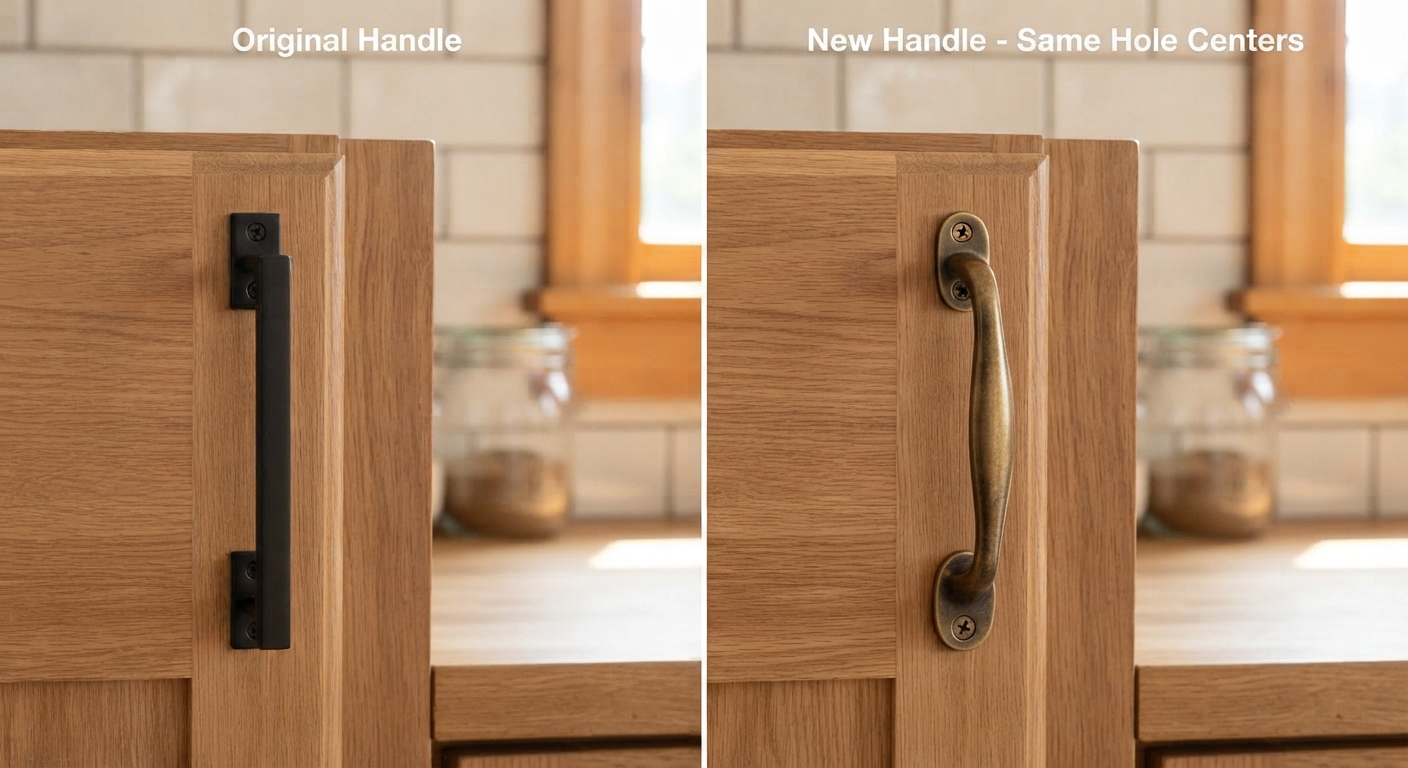
Measure the existing hole spacing accurately.
A handle with the same overall length but different center-to-center spacing will not fit the existing holes.
Important Reminder
Do not confuse:
- Center-to-center spacing
- Overall handle length
- Distance between the outside edges of the bases
Always use the technical drawing.
6. Evaluate Grip Comfort
A handle must be comfortable during real use.
Check:
- Finger clearance
- Grip thickness
- Shape
- Edge treatment
- Projection
- Opening force
- User reach
Finger Clearance
There should be enough space between the handle and cabinet surface for comfortable gripping.
Edge Shape
Sharp or poorly finished edges may be uncomfortable, especially on frequently used kitchen doors.
Projection
Greater projection can improve grip but may also:
- Catch clothing
- Interfere with adjacent doors
- Reduce walkway clearance
- Affect cabinet appearance
User Group
Consider whether the cabinet will be used by:
- Children
- Older users
- Hotel guests
- Office workers
- Users wearing gloves
- People with limited hand strength
A handle should be evaluated through physical use, not only photographs.
7. Select the Base Material
Zinc Alloy
Suitable for:
- Decorative pulls
- Knobs
- Detailed shapes
- Mass-market furniture
- Multiple finish options
Zinc alloy offers good design flexibility, but quality depends on casting, polishing and finishing.
Aluminum
Suitable for:
- Profile handles
- Edge pulls
- Long handles
- Minimalist designs
Aluminum is lightweight and suitable for extrusion.
Stainless Steel
Suitable for:
- Modern kitchens
- Office furniture
- Frequent-use cabinets
- Clean, functional designs
Confirm whether the product is solid stainless steel, stainless-steel tube or another base material with a stainless-steel-effect finish.
Brass
Suitable for:
- Premium furniture
- Traditional designs
- Decorative knobs
- Luxury kitchens
Confirm whether the handle is solid brass or another material with a brass-colored finish.
Steel
Suitable for:
- Wire pulls
- Utility furniture
- Cost-sensitive cabinets
- Industrial designs
The protective coating is important for corrosion resistance.
Material Comparison
|
Material |
Main Advantage |
Common Application |
|
Zinc alloy |
Detailed shapes and finish variety |
Decorative pulls and knobs |
|
Aluminum |
Lightweight and suitable for profiles |
Edge and profile handles |
|
Stainless steel |
Strong, clean appearance |
Kitchens and offices |
|
Brass |
Premium look and substantial feel |
Luxury and traditional furniture |
|
Steel |
Strength and cost efficiency |
Utility and economical furniture |
Material name alone does not determine quality. Construction, thickness, finishing and fixing design also matter.
8. Choose the Surface Finish

Common finishes include:
- Matt black
- Brushed nickel
- Satin nickel
- Polished chrome
- Brushed chrome
- Satin brass
- Polished brass
- Antique brass
- Bronze
- Gunmetal
- Stainless-steel effect
- White
- Custom colors
Coordinate With Other Hardware
Consider matching the handles with:
- Faucets
- Appliances
- Lighting
- Door hardware
- Furniture legs
- Decorative trims
Exact matching is not always required, but the finishes should appear intentional when used together.
Approve a Physical Sample
Finish names such as “brushed gold” or “satin brass” may vary considerably between suppliers.
For project orders:
- Approve a physical sample
- Define an acceptable color range
- Check different production batches
- Review the finish under project lighting
Digital photographs should not be used as the only color reference.
9. Consider the Cabinet Style
Modern Cabinets
Common choices:
- Straight bar pulls
- Edge pulls
- Profile handles
- Minimalist knobs
- Matt black or brushed finishes
Traditional Cabinets
Common choices:
- Cup pulls
- Decorative knobs
- Bow pulls
- Antique brass or bronze finishes
Transitional Cabinets
Combine modern simplicity with traditional details.
Suitable choices include:
- Simple bow pulls
- Refined bar pulls
- Matching knobs and pulls
- Satin nickel or brass finishes
Industrial Cabinets
Common choices:
- Steel handles
- Black finishes
- Knurled pulls
- Exposed fixing details
Luxury Cabinets
May use:
- Solid brass
- Long handles
- Textured surfaces
- Customized finishes
- Coordinated hardware collections
Style should not compromise comfort or fixing strength.
10. Confirm the Mounting Method
Most surface-mounted pulls use screws inserted through the back of the cabinet door or drawer front.
Confirm:
- Number of mounting holes
- Center-to-center spacing
- Thread type
- Screw diameter
- Screw length
- Panel thickness
- Washer requirement
- Required drilling diameter
Screw Length
The screw must engage the handle securely without bottoming out.
A screw that is too short may loosen.
A screw that is too long may prevent the handle from tightening against the cabinet surface.
Projects using several panel thicknesses may require different screw lengths.
Edge Pulls
Check:
- Rear or edge fixing
- Door thickness
- Screw position
- Gap between adjacent doors
- Clearance behind the door
Recessed Pulls
Confirm:
- Routing dimensions
- Installation depth
- Adhesive or screw fixing
- Edge distance
- Panel strength
11. Consider Handle Placement
The position should provide convenient access and consistent appearance.
Common approaches include:
- Pulls near the opening edge of cabinet doors
- Horizontal pulls on drawers
- Vertical pulls on tall doors
- Knobs near door corners
- Edge pulls aligned along the door edge
- Long handles centered or aligned to a design line
Before drilling, check:
- Opening direction
- Adjacent doors
- Drawer movement
- Internal hardware
- User reach
- Visual alignment
- Handle collisions
Use a drilling template or jig for repeated installations.
12. Check the Operating Environment
Kitchens
Handles should tolerate frequent touching, cleaning and normal humidity.
Bathrooms
Consider moisture, condensation and cleaning products.
Coastal Areas
Improved corrosion resistance may be required.
Hotels
Consider frequent use, cleaning, batch consistency and spare parts.
Commercial Furniture
Consider durability, standardized sizes and easy replacement.
The finish should be evaluated according to the actual environment rather than appearance alone.
13. Evaluate Cleaning and Maintenance
Handles with deep grooves, complex textures or enclosed spaces may collect dirt more easily.
Consider:
- Cleaning frequency
- Surface texture
- Fingerprints
- Chemical resistance
- Sharp internal corners
- Accessibility around the handle base
Polished finishes may show fingerprints more clearly.
Textured or matt finishes may hide fingerprints but still require suitable cleaning methods.
Follow the supplier’s care instructions.
14. Choose Between Knobs and Pulls
Choose Knobs When:
- The door is small or lightweight
- Simple drilling is preferred
- Traditional styling is required
- Compact hardware is desired
Choose Pulls When:
- A larger grip is required
- The door or drawer is frequently used
- The drawer is wide
- Modern styling is preferred
- Easier operation is important
A kitchen can also combine knobs on doors and pulls on drawers, provided the collection and finish remain coordinated.
15. New Cabinets vs Replacement Handles
New Cabinet Production
Select the handle before drilling.
Approve:
- Product model
- C-C spacing
- Placement
- Screws
- Finish
- Drilling template
Replacement Project
Measure:
- Existing center-to-center spacing
- Existing hole diameter
- Surface marks
- Required base coverage
- Door thickness
A new handle may need larger bases or backplates to cover marks from the previous hardware.
16. Project and OEM Requirements
For large or customized orders, confirm:
- Logo
- Base material
- Finish
- Size
- Screw specification
- Packaging
- Labels
- Minimum order quantity
- Sample lead time
- Production lead time
- Color tolerance
- Spare quantity
- Batch identification
Any customized sample should be approved before mass production.
The approved sample, drawing and packaging should form the project’s golden sample.
17. Test the Handle Before Ordering
Install the handle on a representative door or drawer.
Check:
- Grip comfort
- Visual proportion
- Projection
- Fixing security
- Screw compatibility
- Opening force
- Adjacent clearance
- Finish under actual lighting
- Cleaning
- Alignment with other handles
For wide drawers, test whether one centrally positioned pull provides suitable operation.
For heavy doors, confirm that the handle and panel fixings withstand the required pulling force.
Cabinet Handle Specification Checklist
Before requesting a quotation, provide:
- Handle type
- Cabinet application
- Door or drawer dimensions
- Door material
- Door thickness
- Door weight
- Base material
- Surface finish
- Center-to-center spacing
- Overall length
- Projection
- Grip clearance
- Fixing method
- Screw size and length
- Quantity
- Packaging
- OEM requirement
- Sample requirement
- Delivery schedule
Common Buying Mistakes
Choosing Handles After Door Drilling
This limits the available sizes and may create compatibility problems.
Confusing Overall Length and C-C Spacing
The handle may not fit the drilled holes.
Selecting Only by Appearance
Grip, strength and installation may be unsuitable.
Ignoring Door Weight
Small decorative pulls may be uncomfortable on heavy doors.
Using the Same Screw for Every Panel
Different door thicknesses may require different screw lengths.
Approving Finish From Photographs
Screen color and lighting can create significant differences.
Ignoring Handle Projection
The handle may hit adjacent doors or reduce walkway clearance.
Using Standard Pulls on Appliances
Heavy appliance doors may require stronger hardware.
Skipping Sample Installation
Problems may be discovered only after mass drilling or delivery.
Failing to Order Spare Handles
Future replacement may become difficult if the design or finish changes.
Frequently Asked Questions
What size cabinet handle should I choose?
Choose a size that provides a comfortable grip and suits the door or drawer proportions. There is no universal size for every cabinet.
What does C-C mean on cabinet handles?
C-C means center-to-center: the distance between the centers of the mounting holes.
Are longer cabinet pulls better?
Not always. Longer pulls can suit wide drawers and tall doors, but they require adequate fixing strength and must remain proportional to the cabinet.
Which handle material is most durable?
Durability depends on material, construction, thickness, surface treatment, installation and environment. Material name alone is not sufficient.
Are knobs or pulls easier to use?
Pulls generally offer a larger gripping area. Knobs are compact and require simpler drilling.
Can I mix knobs and pulls?
Yes. Many designs use knobs on doors and pulls on drawers. Keep their style and finish coordinated.
How do I match replacement cabinet handles?
Measure the existing center-to-center spacing and check whether the new handle bases cover the existing holes and marks.
What finish is best for kitchen handles?
Choose a finish that suits the design, cleaning requirements and environment. Approve a physical sample before large orders.
Can regular cabinet pulls be used on appliance doors?
Not automatically. Appliance doors may require stronger pulls and fixing systems.
Should handles be selected before cabinet production?
Yes. Approving the handle before drilling reduces compatibility problems and production changes.
Conclusion
Choosing cabinet handles requires balancing:
- Function
- Comfort
- Size
- Material
- Finish
- Installation
- Appearance
- Environment
- Project requirements
The correct process begins with the cabinet application and door specifications.
After selecting the handle type, buyers should confirm center-to-center spacing, overall dimensions, grip clearance, projection, material, finish and fixing method.
For cabinet manufacturers and project contractors, the safest approach is to install and approve a physical sample before drilling or mass production.
Related Haits Product Categories
Cabinet Knobs vs Pulls
What Are Cabinet Handles and Pulls?