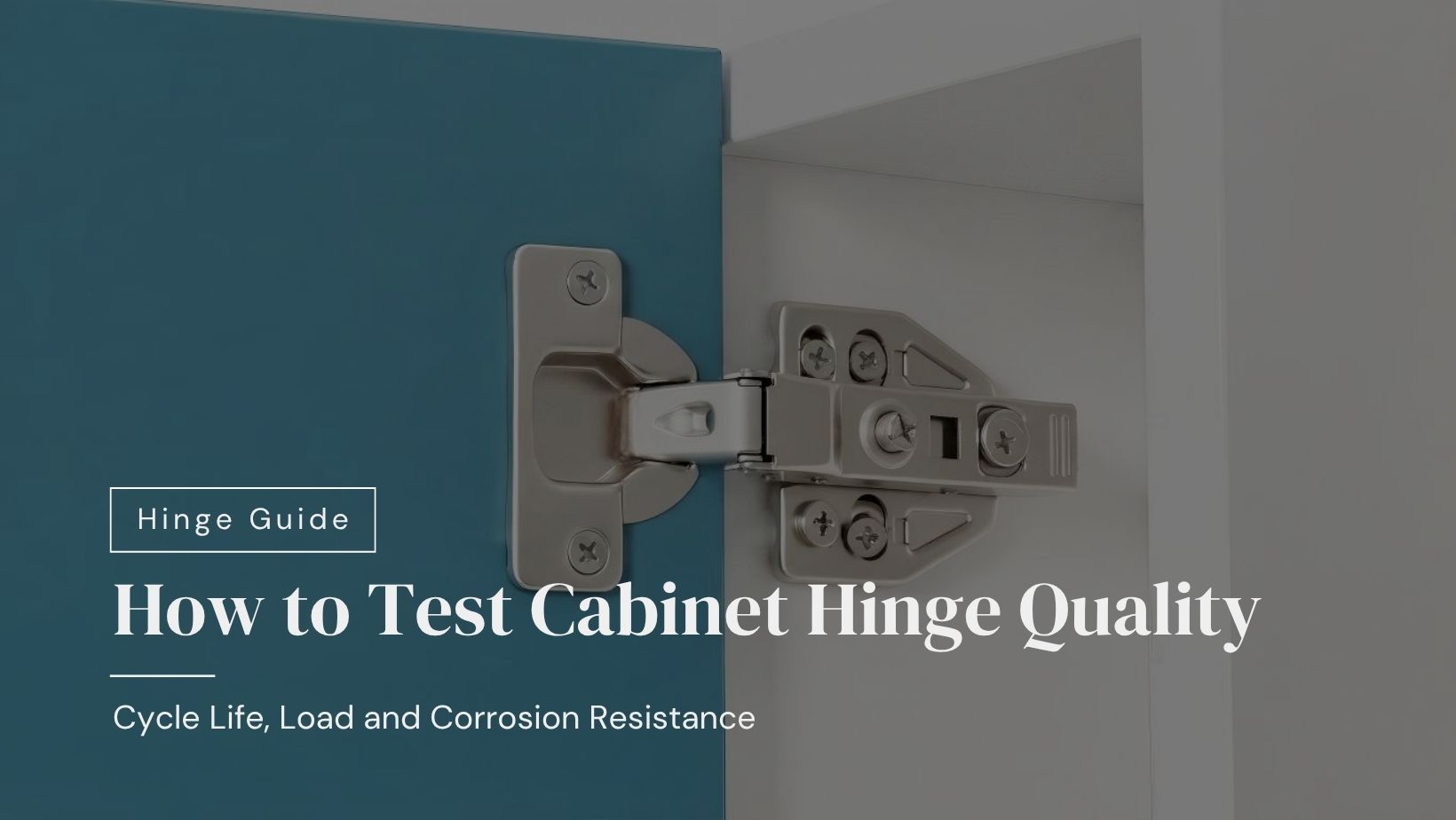
110 Degree vs 165 Degree Cabinet Hinges

110° vs 165° Cabinet Hinges: A Complete Guide for Cabinet Manufacturers
When selecting cabinet hinges, many buyers focus on features such as soft close, cup size and adjustment.
However, another important specification is often overlooked:
The opening angle of the hinge.
The opening angle determines how far the cabinet door can open and directly affects:
- Cabinet accessibility
- User experience
- Space utilization
- Project design flexibility
The two most common concealed cabinet hinge opening angles are:
- 110° cabinet hinges
- 165° wide angle cabinet hinges
This guide explains the differences and helps cabinet manufacturers, joinery contractors and project buyers select the right solution.
1. What Does Cabinet Hinge Opening Angle Mean?

The opening angle refers to how far a cabinet door can rotate from its closed position.
For example:
A 110° hinge allows the door to open approximately 110 degrees.
A 165° hinge allows a much wider opening range.
The opening angle affects how much access users have inside the cabinet.
2. What Are 110° Cabinet Hinges?

110° cabinet hinges are the most common concealed hinges used in modern cabinetry.
They provide a balance between:
- Door movement
- Cabinet structure
- Installation space
- Cost efficiency
Advantages of 110° Hinges
1. Standard Application
110° is widely accepted for everyday cabinet applications.
2. Good Balance Between Access and Structure
The opening angle provides sufficient access without requiring additional cabinet clearance.
3. High Market Acceptance
Most kitchen cabinet manufacturers use 110° hinges as a standard specification.
Typical Applications
110° hinges are commonly used in:
- Kitchen cabinets
- Bathroom vanities
- Wardrobes
- Office furniture
- Residential projects
3. What Are 165° Cabinet Hinges?
165° cabinet hinges are designed for applications where wider door opening is required.
They are often called:
- Wide angle hinges
- Large opening hinges
- Special opening hinges
Advantages of 165° Hinges
1. Wider Cabinet Access
Users can access more of the cabinet interior.
2. Better for Special Cabinet Designs
Especially useful where door movement is limited.
3. Improved Storage Convenience
The wider opening makes it easier to place and remove items.
Typical Applications
165° hinges are often used for:
- Corner cabinets
- Large cabinet doors
- Storage cabinets
- Special furniture designs
- Premium kitchen projects
4. 110° vs 165° Cabinet Hinges Comparison
|
Feature |
110° Cabinet Hinge |
165° Cabinet Hinge |
|
Opening Angle |
Standard |
Wide opening |
|
Market Usage |
Very common |
Special applications |
|
Cabinet Access |
Good |
Excellent |
|
Cost |
More economical |
Usually higher |
|
Installation |
Standard |
Requires consideration |
|
Application |
General cabinets |
Corner and wide access cabinets |
5. Which Hinge Is Better for Kitchen Cabinets?
The answer depends on cabinet design.
Standard Kitchen Cabinets
Recommended:
110° Cabinet Hinges
Reasons:
- Suitable for most cabinet doors
- Cost-effective
- Easy installation
- Proven reliability
Corner Cabinets
Recommended:
165° Cabinet Hinges
Reasons:
- Improved access
- Reduces door obstruction
- Better use of cabinet space
Premium Kitchen Projects
The choice depends on design requirements.
Some premium projects may use:
- 110° standard hinges
- 165° wide opening hinges
- Combination solutions
6. Factors to Consider Before Choosing Opening Angle
1. Cabinet Location
Ask:
Is this a standard cabinet?
A corner cabinet?
A special storage unit?
2. Door Size
Large doors may require careful hinge selection.
Consider:
- Door height
- Door width
- Door weight
3. Internal Cabinet Access
If users need maximum access, a wider opening angle may provide better usability.
4. Cabinet Layout
Kitchen layout affects hinge selection.
For example:
- Corner cabinets
- Narrow spaces
- Adjacent cabinets
may require wider opening solutions.
7. Can 110° and 165° Hinges Use Soft Close?
Yes.
Both opening angles can be designed with:
- Soft close mechanism
- Concealed installation
- Adjustment functions
The opening angle and closing function are two different specifications.
For example:
A hinge can be:
- 110° + soft close
- 165° + soft close
8. Installation Considerations
Before installation, manufacturers should confirm:
- Cabinet structure
- Door thickness
- Overlay type
- Hinge cup specification
- Mounting plate
- Opening clearance
A wider opening hinge may require checking whether surrounding cabinets or walls interfere with door movement.
9. Common Mistakes When Selecting Hinge Angles
Mistake 1: Using 110° Hinges Everywhere
110° works for most applications, but not all cabinet designs.
Mistake 2: Ignoring Cabinet Layout
Corner and restricted-space cabinets may require wider opening angles.
Mistake 3: Choosing Only Based on Price
The cheapest hinge may not provide the best user experience.
Mistake 4: Not Testing Before Projects
For large residential or hospitality projects, sample testing is recommended.
Frequently Asked Questions
Is 110° or 165° cabinet hinge better?
Neither is universally better. 110° is suitable for most cabinets, while 165° is better when wider access is required.
What is a 165° cabinet hinge used for?
165° hinges are commonly used for corner cabinets, large doors and applications requiring maximum opening access.
Are 165° hinges more expensive?
They are usually more complex because they require a wider opening mechanism.
Can I replace a 110° hinge with a 165° hinge?
Not always. The cabinet design, door clearance and mounting position must be checked first.
What is the most common cabinet hinge angle?
110° is one of the most widely used opening angles for kitchen cabinets.
Conclusion
Choosing the correct cabinet hinge opening angle is essential for creating functional and user-friendly cabinets.
For most kitchen cabinets and standard furniture applications:
110° cabinet hinges provide a reliable and practical solution.
For applications requiring maximum access, such as corner cabinets and special storage units:
165° wide opening hinges provide better functionality.
For cabinet manufacturers, joinery contractors and project suppliers, understanding opening angles helps create better cabinet solutions and avoid installation problems.
Related Haits Products
3D Adjustable Cabinet Hinges Guide
Full Overlay vs Half Overlay vs Inset Cabinet Hinges