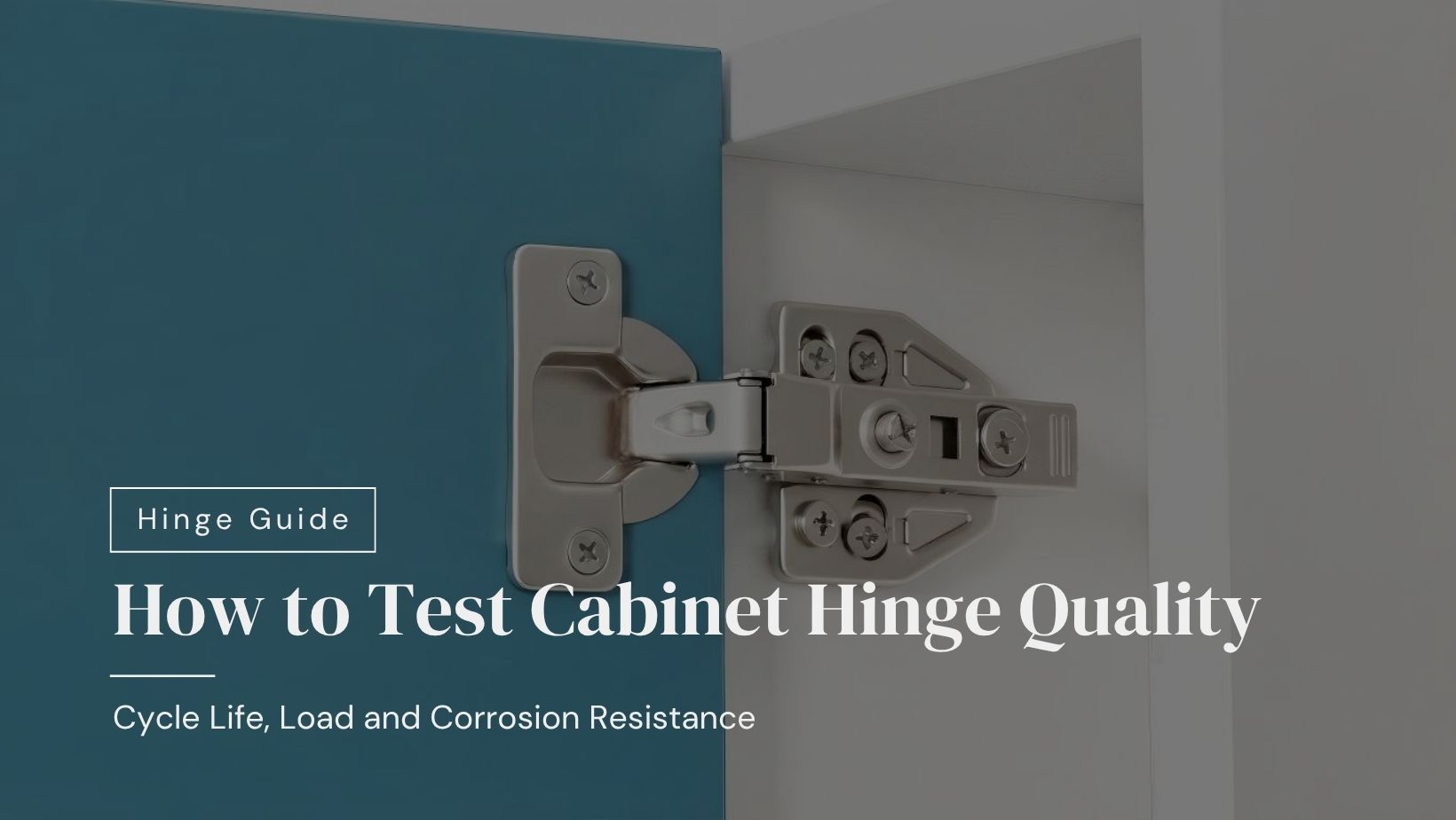
How to Choose Cabinet Hinges

How to Choose Cabinet Hinges: The Complete Buying Guide
Cabinet hinges are small but critical components that determine how cabinet doors function, perform and feel.
A high-quality cabinet hinge provides:
- Smooth opening and closing
- Accurate door alignment
- Long-term durability
- Better user experience
For cabinet manufacturers, joinery companies and project contractors, selecting the right hinge is not only about fitting a door — it is about creating a reliable cabinet system.
This guide explains the key factors to consider when choosing cabinet hinges.
1. Understand Different Types of Cabinet Hinges
Before selecting a hinge, it is important to understand the different options available.
Concealed Cabinet Hinges

Concealed hinges are hidden when the cabinet door is closed.
They are the most common choice for modern kitchens and furniture.
Advantages:
- Clean appearance
- Adjustable installation
- Suitable for mass production
- Compatible with modern cabinet designs
Applications:
- Kitchen cabinets
- Bathroom vanities
- Wardrobes
- Residential projects
Soft Close Cabinet Hinges

Soft close hinges include a damping mechanism that controls the closing movement.
Advantages:
- Quiet closing
- Prevents door slamming
- Improves cabinet durability
- Creates a premium user experience
Today, soft close hinges have become a standard feature for many premium cabinet applications.
Clip-On Cabinet Hinges

Clip-on hinges allow quick installation and removal.
Advantages:
- Faster assembly
- Easier maintenance
- Improved production efficiency
They are popular among cabinet manufacturers because they reduce installation time.
Slide-On Cabinet Hinges

Slide-on hinges are mounted by sliding the hinge onto the mounting plate.
Advantages:
- Reliable connection
- Simple structure
- Cost-effective
2. Choose the Correct Hinge Cup Size
The most common concealed cabinet hinge specification is:
35mm Cup Hinge
The 35mm hinge cup is widely used in:
- Kitchen cabinets
- Bathroom furniture
- Wardrobes
When selecting hinges, manufacturers should confirm:
- Cup diameter
- Cup depth
- Door thickness
- Drilling position
Incorrect measurements may cause installation problems.
3. Select the Correct Overlay Type

One of the most important decisions is choosing the correct overlay.
Full Overlay Hinge

The cabinet door covers almost the entire cabinet side panel.
Common applications:
- Modern frameless cabinets
- Kitchen cabinets
Half Overlay Hinge

Two cabinet doors share one cabinet side panel.
Common applications:
- Traditional cabinet construction
Inset Hinge

The door sits inside the cabinet frame.
Advantages:
- Premium appearance
- Clean cabinet lines
Applications:
- High-end furniture
- Custom cabinetry
4. Select the Right Opening Angle

Cabinet hinges are available in different opening angles.
|
Opening Angle |
Application |
|
95° |
Standard applications |
|
110° |
Most kitchen cabinets |
|
165° |
Wide opening requirements |
110° Cabinet Hinges
The most common choice for kitchens.
Suitable for:
- Standard cabinet doors
- Residential kitchens
- Bathroom cabinets
165° Cabinet Hinges
Used when wider access is required.
Suitable for:
- Corner cabinets
- Large doors
- Special applications
5. Consider Cabinet Door Weight and Size
The hinge must match the door requirements.
Consider:
- Door height
- Door width
- Door thickness
- Door material
- Number of hinges required
Examples:
Small cabinet door:
→ 2 hinges may be sufficient
Large or heavy door:
→ Additional hinges may be required
6. Soft Close or Standard Hinge?
This is one of the most common purchasing decisions.
Choose Soft Close Hinges When:
You need:
- Premium feeling
- Quiet operation
- Better customer experience
Recommended for:
- Kitchen cabinets
- Hotels
- Apartments
- Luxury projects
Choose Standard Hinges When:
The project requires:
- Cost control
- Basic functionality
- Large quantity supply
7. Check Adjustment Features
Modern cabinet hinges should provide easy adjustment.
Important adjustment functions include:
Side Adjustment
Controls door alignment left and right.
Depth Adjustment
Controls the distance between door and cabinet.
Height Adjustment
Adjusts door position vertically.
Why Adjustment Matters?
For cabinet manufacturers and installers, adjustment capability reduces:
- Installation time
- Service problems
- Door alignment issues
8. Consider Project Requirements
Different projects require different hinge solutions.
Kitchen Projects
Recommended:
- Soft close
- 110°
- Concealed hinges
Bathroom Vanity Projects
Recommended:
- Corrosion-resistant hinges
- Soft close function
Hotel Projects
Important factors:
- Durability
- Consistency
- Easy maintenance
Apartment Projects
Important factors:
- Cost efficiency
- Reliable performance
- Standard specifications
9. How to Evaluate a Cabinet Hinge Supplier
For manufacturers and project buyers, choosing the supplier is as important as choosing the hinge.
Consider:
Product Quality
- Material thickness
- Precision manufacturing
- Cycle testing
Production Capability
- Stable delivery
- OEM capability
- Custom packaging
Technical Support
A reliable supplier should provide:
- Installation guidance
- Product specifications
- Sample support
- Engineering assistance
Common Mistakes When Choosing Cabinet Hinges
Mistake 1: Choosing Only Based on Price
Low-cost hinges may create:
- Door alignment problems
- Short service life
- Customer complaints
Mistake 2: Ignoring Cabinet Construction
Different cabinet structures require different hinges.
Mistake 3: Selecting the Wrong Overlay
Incorrect overlay selection may prevent proper door installation.
Mistake 4: Not Considering Future Maintenance
Projects require reliable hardware that can perform for years.
Frequently Asked Questions
What is the most common cabinet hinge?
The most common cabinet hinge is the 35mm concealed soft close hinge used in kitchen cabinets and furniture.
What cabinet hinge is best for kitchen cabinets?
Soft close 110° concealed hinges are widely used because they provide smooth operation, durability and good user experience.
How many hinges does a cabinet door need?
The number depends on door size, weight and application. Larger doors usually require more hinges.
What is the difference between overlay and inset hinges?
Overlay hinges are designed for doors that cover the cabinet frame, while inset hinges are designed for doors installed inside the cabinet opening.
Are soft close hinges worth it?
For premium kitchens and residential projects, soft close hinges provide better user experience and are widely preferred.
Conclusion
Choosing the right cabinet hinge requires more than selecting a standard part.
Manufacturers and project contractors should consider:
- Hinge type
- Cup size
- Overlay
- Opening angle
- Door weight
- Adjustment features
- Project requirements
A properly selected hinge system improves cabinet quality, reduces installation issues and creates better long-term value.
Related Haits Products


Soft Close Cabinet Hinges Explained
What Are Cabinet Hinges